Fishing regulations
National fishing legislation
Check the national catch sizes, catch quotas and closed seasons here.
It is the fisher’s responsibility to check which prohibitions and restrictions apply before going fishing. The fisheries management fee does not entitle you to fish in rapids and currents in waters with migratory fish, at sites requiring a site-specific permit, or at sites where fishing is entirely prohibited. You can check these at the web site Kalastusrajoitus.fi.
Local fishing regulations
In addition to national restrictions and regulations the fisheries region has its own local fishing regulations.
The following fishing regulations are in force within the fisheries region:
Catch quota for pikeperch
The catch limit for pike-perch is three fish per fisher per day throughout the fisheries area. The limit does not apply to gillnet fishing, commercial fishing or the capture of broodstock for fish-farming purposes.
The decision is in force until 31 December 2030.
Lure fishing for sea trout in marine waters
In the marine waters of the fisheries region lure fishing for sea trout is permitted only with lures fitted with no more than one barbless treble hook or two barbless single hooks. A hook with its barb crimped down is considered barbless. Remember that sea trout with an adipose fin, as well as undersized sea trout, must always be released.
The decision is in force until 31 December 2030.
Fishing ban from 15 May to 15 June
Fishing is prohibited annually from 15 May to 15 June in the following areas, with the exception of angling with a hook and line and fishing with fish traps (katiska):
- Långviken
- Tavastfjärden
- Pikkalanlahti
- Pikkalanjoki
- the northern part of Vikträsk
The boundaries of the fishing restriction areas are shown in the map appendix on pages 1 and 2.
The decision is in force until 31 December 2030.
Fishing ban downstream of the Pikkalanjoki regulating dam
All fishing is prohibited year-round in the Pikkalanjoki River between the regulating dam and the river mouth.
The decision is in force until 31 December 2030.
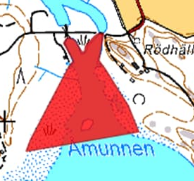
Gillnet fishing ban in Espoonlahti from 15 August to 31 December
Gillnet fishing is prohibited in Espoonlahti annually from 15 August to 31 December. The boundaries of the restricted area are shown in the map appendix on page 3.
The decision is in force until 31 December 2030.
More detailed information can be found on the national Kalastusrajoitus.fi website.
Local recommendations
The fisheries region hopes that the following recommendations will be followed, even though they are not official regulations confirmed by the fishing authorities. Some of the recommendations will become official regulations 1.1.2029.
Minimum catch size for pike-perch
The minimum recommended catch size for pikeperch is 45 cm throughout the fisheries area.
This recommendation will become an official regulation 1.1.2029
Nets made of heavy-duty twine
In accordance with the national salmon and sea trout strategy, it is recommended not to use nets made of heavy-duty twine within 50 metres of the shore from 1 April to 15 May or from 1 October to 31 December. Nets made of heavy-duty twine means nets made from monofilament line more than 0.20 mm thick, twisted twine or strong fibre material.
Minimum mesh sizes in marine waters
For nets up to 1.8 metres high, 43 mm.
For nets more than 1.8 metres high, the minimum permitted mesh size is 50 mm.
This recommendation will become an official regulation 1.1.2029
Minimum mesh sizes in lake areas
For nets more than 1.8 metres high, 50 mm.
For nets more than 1.8 metres high, 55 mm.
These recommendations will become official regulations 1.1.2029
!! Please note that if you are fishing with permission from the owner of the water area (local permit), the regulations might be even stricter than the national and fisheries region ones. The local permit seller will inform you about their own regulations.!!
Handling Fish Properly
When keeping fish for food, regulations require they be killed quickly and humanely. A recommended method is to first stun the fish with a firm blow above the eyes, then bleed it by cutting the gill artery. Small fish can often be killed by bending the neck.
Fish that are undersized, protected, or otherwise released must be handled gently to prevent injury and give them the best chance of survival. Avoid touching the fish and minimize the time it spends out of water. Unhook it quickly and carefully and release it back as soon as possible. Barbless hooks and smooth, knotless nets help reduce harm.
Even if an undersized or protected fish is injured, it must be released. If the fish is badly hurt and unlikely to survive, it must be killed before being released to prevent unnecessary suffering.